
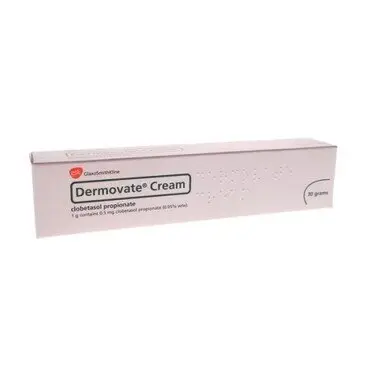
Images for illustrative purposes only
Dermovate Cream & Ointment
Dermovate cream, also known as Dermovate ointment, is a topical corticosteroid treatment for treatment of eczema, dermatitis, and psoriasis. Dermovate cream is a powerful remedy for treating more severe cases of skin inflammation. It works inside the skin cells and lessens the release of inflammation-causing chemicals, resulting in less itching, redness, and swelling. Dermovate cream is suitable for adults, the elderly, and children over one year old.
- Treatment for skin inflammation conditions
- Fast acting topical corticosteroid
- For short-term use only
Buy Dermovate Online
Dermovate cream is a topical treatment for more severe forms of skin conditions and irritation. Also commonly referred to as Dermovate ointment, it is considered one of the strongest treatments for flare-ups of eczema, dermatitis, and psoriasis.
You can buy Dermovate cream from Pharmacy Online and enjoy convenient delivery straight to your doorstep. After completing a short assessment, our registered pharmacists will assess whether the ointment is suitable and then issue a prescription.
When to use Dermovate Cream/Ointment?
Dermovate's main uses include:
- Severe Eczema/Dermatitis: Beneficial for severe cases and frequent relapses.
- Psoriasis: To treat localised thickened, scaly patches. However, it's usually not recommended for widespread psoriasis.
- Lichen Planus: A condition that causes itchy and purple-tinted flat bumps on the skin.
- Discoid Lupus Erythematosus: An autoimmune condition that impacts the scalp or face.
If your skin condition doesn't improve with standard treatments, a doctor or pharmacist might recommend Dermovate. Due to its strength, the ointment isn't suitable for everyone, and most use cases are limited to:
- Severe Inflammation: Dermovate is a go-to treatment when other ointments cannot control severe inflammation caused by conditions like eczema or psoriasis.
- Resistant Skin Conditions: If other corticosteroid ointments fail to relieve your skin, Dermovate can provide some relief.
While Dermovate is a highly effective treatment, it's for short-term use only. Prolonged usage could cause skin thinning and other side effects.
Dermovate Cream & Ointment Age Restrictions:
Dermovate is suitable for use in adults and children aged one and over. However, you should always seek medical advice before using the ointment on young children, as it might not suit their unique needs and symptoms.
How to use Dermovate Cream & Ointment?
You can apply Dermovate cream using your hands, but ensure you wash them thoroughly afterwards. The patient information leaflet lists the recommended amounts for adults and children - it's vital to read these instructions before applying the treatment.
Reduce the amount of cream you use for children aged one to two, and remember to use moisturiser when you apply Dermovate cream.
Please note that the ointment is only for use on the skin, and applying it to the genitals or around the eyes can lead to serious side effects.
The following tips ensure you use Dermovate safely:
- Apply a gentle moisturiser to the skin once the ointment is fully absorbed.
- Never apply it on or near broken skin.
- Do not apply Dermovate onto cold sores.
- Keep it out of reach of pets and children.
- Never use Dermovate Cream & Ointment past the expiration date.
When to Avoid Using Dermovate?
You should avoid using Dermovate Cream and Ointment in the following situations:
- Open Wounds: Never use Dermovate on open cuts, wounds, or infected areas of the skin.
- Breastfeeding: Dermovate may pass into breast milk and pose a risk to a breastfeeding baby. If you're nursing, please ask our registered pharmacists for alternative treatment recommendations.
- Pregnancy: While specialists are still exploring whether Dermovate carries risks during pregnancy, it's best to avoid it and seek advice from your doctor first.
- Thin Skin: Avoid applying the ointment to delicate or thin skin, including areas around the eyes and eyelids.
If you're unsure whether Dermovate is right for you, please contact your GP or pharmacist.
Precautions for Dermovate Cream
Never use Dermovate as a moisturiser; follow the instructions in your information leaflet. When applying the treatment, use a thin layer and gently rub it into the skin. If you notice that your condition is worsening or you experience any reactions, please stop using Dermovate Cream immediately.
Dermovate Cream Ingredients:
Dermovate Cream and Ointment are formulated with the following ingredients:
Active Ingredient: Clobetasol propionate 0.05% (equivalent to 0.5 mg per gram).
Inactive Ingredients (Cream): Propylene glycol, citric acid, purified water, cetyl alcohol, chlorocresol, glyceryl monostearate, glyceryl stearate/PEG 100 stearate, stearyl alcohol, sodium citrate, and white wax.
Always check the ingredient list to ensure you're not allergic or sensitive to any components.
Side Effects of Dermovate Cream
There is a general risk of side effects with all medications and treatments, meaning there are possible risks of side effects when using Dermovate cream. Some of these can be quite mild and can subside over time. Others are more serious and should be reported to your GP right away if you experience any side effects. Please contact a member of our team if you are concerned about any potential side effects when using Dermovate Cream.
Common side effects of Dermovate cream include:
- Thinning of the skin
- Burning and itchy skin
- Increased hair growth
- Changes in skin colour
If you experience any of the above side effects when using Dermovate cream, cease use immediately and seek medical advice.
Can I buy Dermovate Cream over the counter?
No, you can't. Dermovate ointment contains clobetasol propionate (0.05%), which is a potent ingredient. You'll need to make a GP appointment or use a registered pharmacy to access the cream.
Can I use a hydrating cream or emollient whilst using Dermovate cream/ointment?
Yes, we encourage you to use an emollient or other type of hydrating cream alongside Dermovate cream/ointment, as this will benefit your skin and certain skin conditions, such as eczema and psoriasis.
How often should I use Dermovate cream/ointment to relieve skin conditions like eczema and psoriasis?
We recommend that you use a thin layer of Dermovate cream very sparingly, usually applied 1 or 2 times a day. Do not use Dermovate cream more than two times daily, as its potent formula is not recommended for extensive use.
Can Dermovate Cream/Ointment be used to treat eczema flare-ups?
Yes, Dermovate Cream and Ointment is an effective treatment for eczema flare-ups. It's most popular as an alternative treatment when others haven't worked. If you have mild eczema, your doctor might recommend a gentler treatment.
How effective is Dermovate in managing psoriasis symptoms?
The ointment is highly effective in controlling and relieving localised psoriasis symptoms, such as plaques. It can reduce localised itching, scaling and inflammation but isn't the best option for widespread cases of psoriasis.
Is Dermovate suitable for all types of eczema?
In most cases, Dermovate is used as a last-resort treatment when gentler formulas haven't worked. It can effectively treat severe eczema and reduce the frequency of flare-ups.
Can Dermovate be used on sensitive areas affected by psoriasis or eczema, like around joints?
You can use the ointment on some sensitive areas, but please follow your doctor's advice. It's also a good idea to reduce the amount you apply. Please consult your doctor before applying it to facial skin, as it can lead to thinning.
How quickly does Dermovate start working for eczema or psoriasis?
You may notice improvements within a few days of starting treatment, but full benefits can take several weeks.
Can Dermovate be used as a long-term treatment for chronic eczema or psoriasis?
No, Dermovate is a short-term treatment that works best during serious flare-ups. Using it long term could damage your skin and cause other side effects.
Does Dermovate help with itching caused by eczema or psoriasis?
Yes, Dermovate can reduce itching as it treats the underlying symptoms and inflammation.
Can Dermovate be combined with moisturisers for eczema or psoriasis treatment?
Combining your Dermovate treatment with moisturisers can protect your skin and ensure it retains elasticity when using the ointment. However, you should wait at least 30 minutes after applying Dermovate, as applying moisturiser too quickly can impact the ointment's ability to work.
Should I use Dermovate Cream/Ointment on cracked or broken skin caused by eczema or psoriasis?
No, Dermovate should not be applied to cracked or broken skin. If your skin is damaged, consult your doctor for alternative treatments.
Are there any triggers or lifestyle changes to consider while using Dermovate for eczema or psoriasis?
Certain triggers and lifestyle choices can increase the number of flare-ups you experience, but managing stress, avoiding irritants and identifying potential triggers can make a significant difference to your symptoms.
Can Dermovate prevent new psoriasis plaques or eczema flare-ups?
Dermovate treats existing flare-ups but does not prevent new ones. The best way to control your symptoms from reappearing is with preventative treatments and trigger management.
How often should Dermovate be applied during an eczema or psoriasis flare-up?
Application frequency depends on your doctor's recommendation, typically once or twice daily.
Can Dermovate Cream/Ointment worsen eczema or psoriasis if misused?
Yes, improper use or prolonged application can worsen symptoms and increase side effects. Always follow medical advice closely.
Is Dermovate safe for use on eczema or psoriasis in children or elderly patients?
Dermovate is not recommended for children under 1 year old. If you want to use the ointment on a child or are a senior, it's best to contact your doctor before applying Dermovate.
What should I do if eczema or psoriasis does not improve after using Dermovate?
If Dermovate fails to relieve skin inflammation or your symptoms worsen, please seek medical attention immediately. A doctor can recommend an alternative treatment or adjust your dosage frequency.
Warnings
Caution: flammable. Keep your body away from fire or flames after you have put on the medicine. Spread thinly on the affected skin only
Leaflets
Before taking Eumovate ointment or any medicines, regardless of whether they are over the counter or prescription-only, it is essential always to read the patient information leaflet.

