
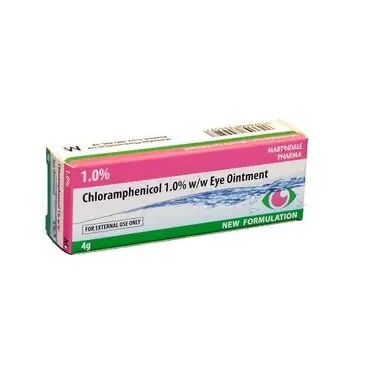
Images for illustrative purposes only
Chloramphenicol Eye Ointment 1.0% w/w 4g
Chloramphenicol 1% Eye Ointment treats simple eye infections that cause grittiness and redness (acute bacterial conjunctivitis). The conjunctiva is a translucent membrane that coats the inner surface of your eyelid and the white section of your eye. This antibiotic eye ointment is suitable for adults and children aged two years and over. The active ingredient (Chloramphenicol) is a broad-spectrum antibiotic that targets bacterial conjunctivitis caused by chloramphenicol-susceptible organisms.
- Antibiotic eye ointment to treat acute bacterial conjunctivitis
- Pharmacy strength eye ointment
- Suitable for 2 years+
Chloramphenicol Eye Ointment is a treatment for acute bacterial conjunctivitis (ABC) in adults and children. Chloramphenicol eye drops belong to the antibiotic family of medicines. ABC is characterised by redness and inflammation of the eye, possibly with a golden crust. The chloramphenicol eye ointment should be used regularly for five days for the infection to clear.
Children and adults can use Chloramphenicol Antibiotic Eye Ointment for treating eye infections, whether it's red or pink eye. When the outer surface of your eye is infected, it appears red, and you experience discharge and pain from the affected eye (acute bacterial conjunctivitis).
When to Use Chloramphenicol Infected Eyes Ointment?
Chloramphenicol Eye Ointment is an effective antibiotic that treats eye bacterial infections. Using it in the following circumstances can reduce your symptoms and ensure you heal quickly:
- Bacterial Conjunctivitis: A common eye infection that causes swelling, discharge and redness of the eye.
- Other Eye Infections: Chloramphenicol Eye Ointment can also treat other eye infections, including cornea (keratitis) and eyelid (blepharitis).
Age Restrictions
Adults and children over two years old can use Chloramphenicol ointment. However, if you're treating a young child, it's best to seek medical advice and ensure you give the child a correct dose of ointment.
How to Use Chloramphenicol Ointment for Infected Eyes?
When using Chloramphenicol Ointment, please follow your doctor's instructions and never take more than advised. Here's how to use it:
- Wash your hands with soap and water before applying it.
- If you have contact lenses, please remove them when using the ointment and avoid using them until you finish the entire course of treatment.
- Take the cap off of your ointment and tilt your head back. Pull down the lower eyelid, but avoid touching your eye. Squeeze a small amount of ointment into your lower eyelid pouch and close your eyes for a few seconds. Repeat with the second eye if necessary.
When to Avoid Using It?
Chloramphenicol Eye Ointment is only suitable for treating bacterial infections. It won't provide relief for fungal conditions or vital eye infections. It's also important to remember that the medicine cannot treat eye injuries and isn't a substitute for eye hygiene.
Precautions
Please read the ingredients carefully to ensure you are not allergic to any of them. If you are pregnant or breastfeeding, it's important to inform a healthcare professional before using the ointment.
If you're unsure of whether the ointment can treat your condition, please ask your doctor or a registered pharmacist for advice.
Ingredients
The ointment's active ingredient is Chloramphenicol, a highly effective antibiotic. The inactive ingredients can differ by brand, but they usually include mineral oil and petroleum bases.
Although side effects are extremely rare, you should stop using Chloramphenicol eye ointment if you experience any burning, stinging, or skin irritation in or around the eye.
Where can I Buy Chloramphenicol 1 Eye Ointment 4g?
You can buy Chloramphenicol Eye Ointment 4g online from Pharmacy Online following a short consultation with one of our pharmacy team.
What dose of Chloramphenicol Eye Ointment Should I take?
Only use Chloramphenicol Eye Ointment as prescribed by your pharmacist or GP. The below are only suggested doses - only follow them if your pharmacist or doctor hasn't recommended further advice.
We recommend the following Chloramphenicol Eye Ointment dosages (this applies to people of all ages):
- Use a tiny amount of Chloramphenicol 1 Eye Ointment in the affected eyes (apply every three hours)
- If symptoms don't improve, speak to your GP, as Chloramphenicol Eye Ointment only works against certain eye infections
- Discontinue Chloramphenicol Eye Ointment 48 hours after your eye feels better
If you wear contact lenses, avoid wearing them during eye infections Chloramphenicol 1 Eye Ointment treatment. Those who wear soft contact lenses mustn't wear them for a minimum of 24 hours following the completed treatment.
Can I use Chloramphenicol Eye Ointment if both eyes are infected?
It is highly recommended that you purchase two separate tubes of Chloramphenicol eye ointment, as acute bacterial conjunctivitis is highly contagious. Cross-contamination may occur if the same Chloramphenicol 1 Eye Ointment is used for both eyes.
How often should I use Chloramphenicol Eye Ointment?
The Chloramphenicol eye ointment should be used four times a day in even doses, and the course of treatment should last for around 7 days. If there is no improvement then seek further advice from your GP.
Can I use Chloramphenicol eye ointment if I'm pregnant or breastfeeding?
If you're pregnant or breastfeeding, avoid using Chloramphenicol Eye Ointment until you've spoken with your GP first.
Can Chloramphenicol Eye Ointment be purchased over the counter?
Chloramphenicol is a pharmacy-only treatment, so you'll need to consult a registered pharmacist before using it. When you order from our online pharmacy, we'll ask you to complete a short assessment to determine whether it's a suitable treatment.
How often should I use Chloramphenicol Eye Ointment?
It depends on your doctor's instructions, but in most cases, you'll apply the ointment three to four times daily.
How long should I use Chloramphenicol Eye Ointment?
Please use it for the entire course as your doctor prescribes. You should continue treatment even if your symptoms improve, as it can prevent the eye infection from returning.
Can Chloramphenicol Eye Ointment be used for conjunctivitis?
Yes, if you have bacterial conjunctivitis. However, the ointment won't be able to treat viral conjunctivitis. Viral infections usually heal on their own within a few weeks.
Can I use Chloramphenicol Eye Ointment if I wear contact lenses?
You can use it if you're willing to remove your contact lenses for the duration of treatment. However, you can't wear contact lenses while you're using the ointment.
Can Chloramphenicol Eye Ointment be used on other parts of the body?
No, it's only suitable for the eyes. Please don't use the ointment on other areas of the body.
What should I do if I miss an application?
If you miss an application for chloramphenicol, please take it once you remember. However, if it's close to your next dose, skip the missed dose and continue with your treatment schedule.
Can I use Chloramphenicol Eye Ointment during pregnancy or breastfeeding?
Please talk to your doctor if you're pregnant or breastfeeding. While it's not normally an issue, a medical professional can give you advice.
How should I store Chloramphenicol Eye Ointment?
Please store the ointment away from pets and children. It's also essential to store it in a cool and dry place to protect it from heat.
What is the shelf life of Chloramphenicol Eye Ointment?
All chloramphenicol tubes have expiration dates. Please follow the advice on the tube and don't use the medicine if it's past its use-by date.
How should I dispose of expired Chloramphenicol Eye Ointment?
You should never flush Chloramphenicol down the toilet as it can cause blockages. Please dispose of it correctly according to your local authority's regulations.
Can I drive after applying Chloramphenicol Eye Ointment?
When you first apply the ointment, it can temporarily blur your vision. Please wait until you can see clearly before driving.
Can Chloramphenicol Eye Ointment be used for styes?
Sometimes, your doctor might prescribe Chloramphenicol for styes, depending on the circumstances.
Can I use makeup while using Chloramphenicol Eye Ointment?
No, don't wear eye makeup while using it. Makeup can irritate your eyes and worsen the infection.
Leaflets
Before taking any medicines, whether over-the-counter or prescription-only, it is essential to always read the patient information leaflet. If you have any questions or require support, please contact our registered pharmacists today.

